
Checking Criminal History in Emanuel County
There is no single free Emanuel County portal that combines police reports, jail intake, every court filing, and the statewide history repository. Start by deciding which record answers the question. The Clerk of Superior Court maintains Superior and State Court files and provides an in-office public terminal. The sheriff and detention center hold their own incident and booking material. Georgia Felon Search is a separate GCIC product limited to reported Georgia felony convictions.
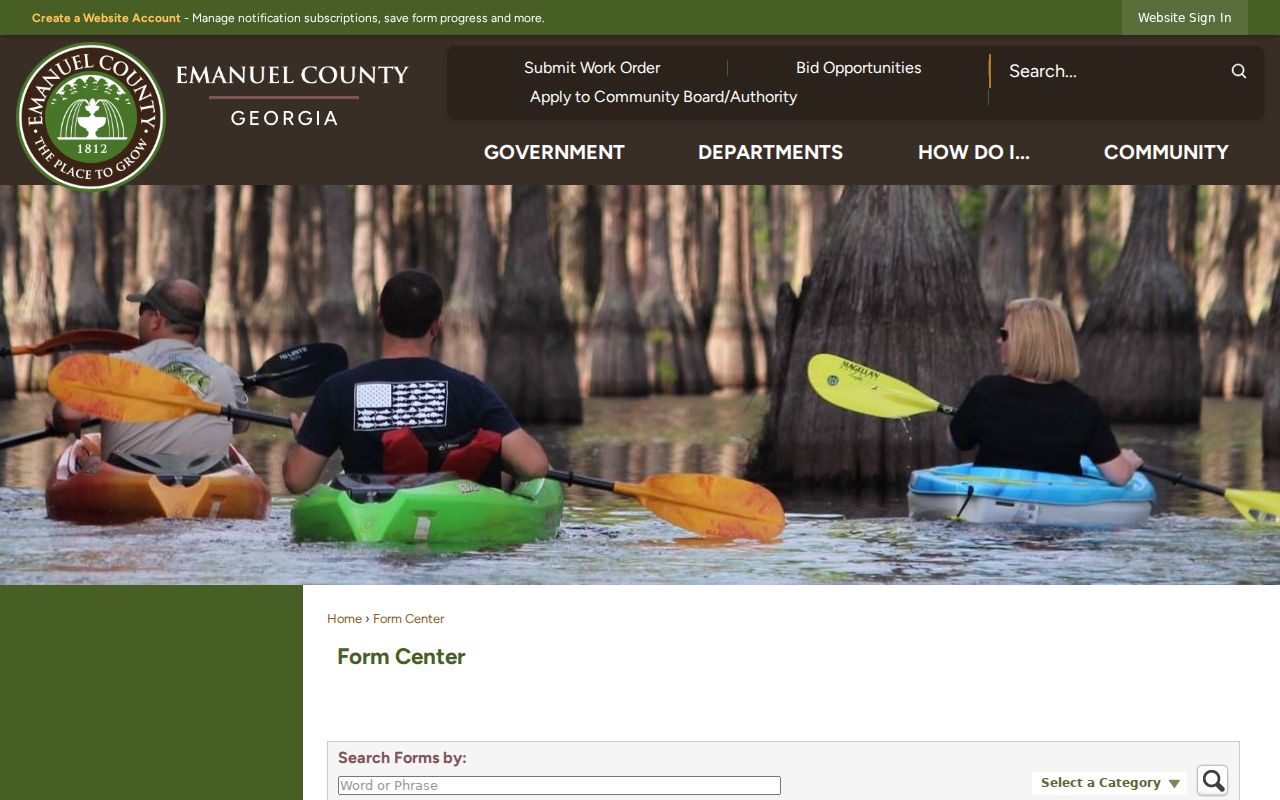
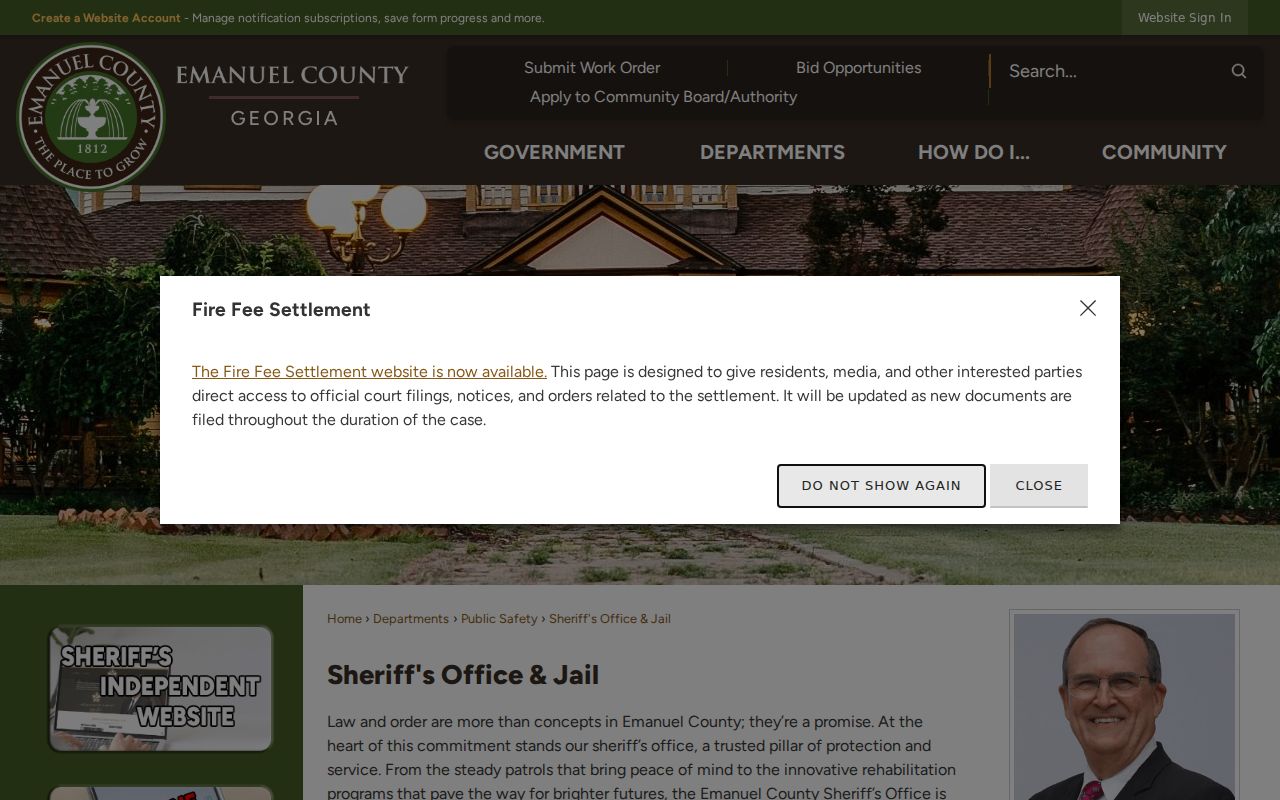
The official Emanuel County homepage is the starting directory for local departments.
Collect the full legal name, date of birth when lawfully available, spelling variants, approximate event date, arresting agency, and any case, citation, report, or booking number. A name match alone is weak evidence. Compare identifiers and then obtain the underlying court disposition when the outcome matters.
- Identify whether the event began with the sheriff, a city police department, a state officer, or a court citation.
- Check current custody with the Emanuel County Detention Center or post-sentence custody with GDC Find an Offender.
- Use the clerk's public terminal or call 478-237-8911 to locate the filed case and exact case number.
- Compare booking charges with the accusation, indictment, docket events, and final judgment; they can differ.
- Request the precise document or a certified disposition from the clerk when an official outcome is needed.
Emanuel Records Follow Separate Paths
An arrest produces a chain, not one master file. The arresting officer writes the incident or arrest report. Intake at the Emanuel County Detention Center creates booking data, a photograph, charge entries, descriptive information, and fingerprints. Qualifying fingerprints and identifiers move to GCIC, while a prosecutor decides which charges to file. Felonies proceed in Superior Court, misdemeanors and many traffic matters in State Court, and ordinance or fine-only matters may stay in municipal court.
| Question | Best starting source |
|---|---|
| What did the officer report? | Arresting agency |
| Is the person locally confined? | Emanuel County Detention Center |
| What charges were filed and resolved? | Emanuel court clerk |
| Is there a reported Georgia felony conviction? | Georgia Felon Search |
| Is the person in state custody? | GDC Find an Offender |
Georgia Official Background Checks
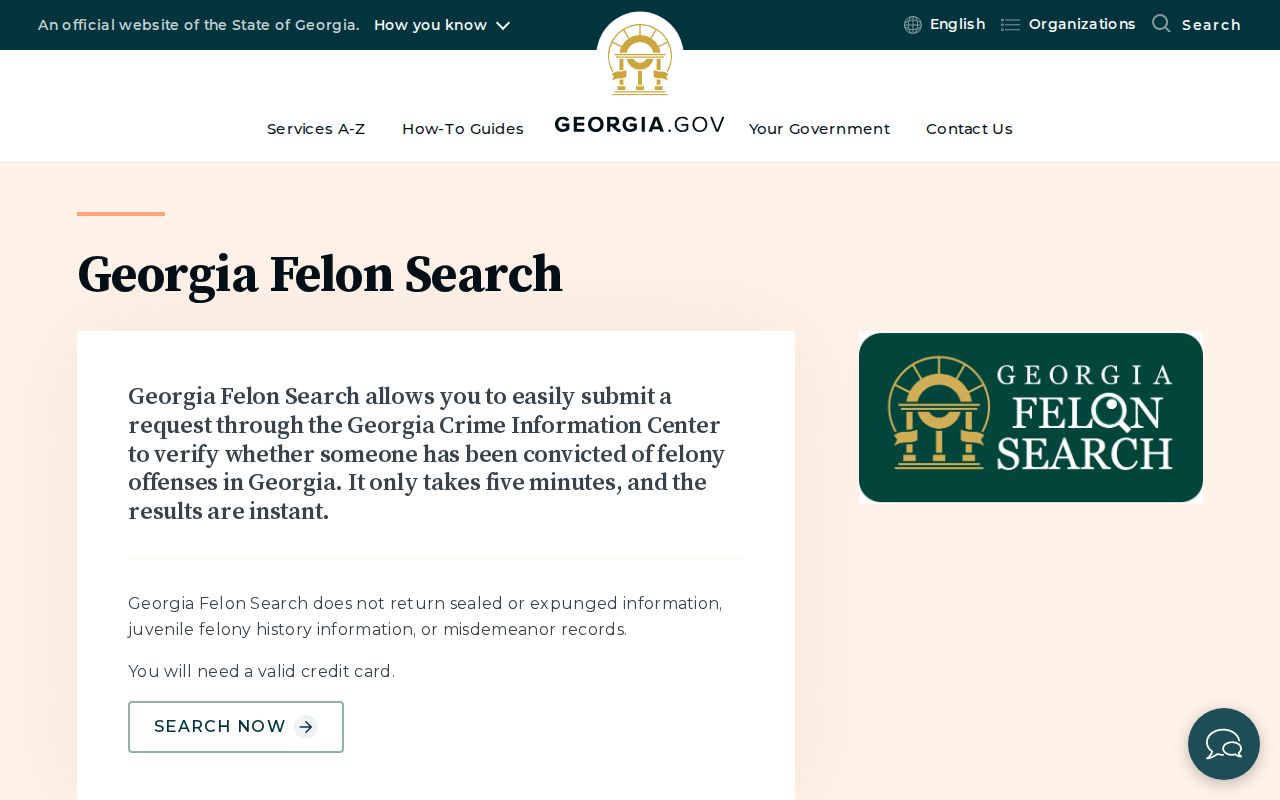
The Georgia Bureau of Investigation's Georgia Crime Information Center is the central repository for statewide arrest and final-disposition information. Its public Georgia Felon Search accepts a first name, last name, date of birth, and sex. It does not require consent or fingerprints, but it is a limited felony-conviction product: misdemeanors, juvenile history, and restricted records are outside its stated scope. The portal charges a credit-card transaction fee; confirm the live amount before submitting because the accessible agency material does not publish a stable figure.
The state's Georgia Felon Search page explains that limited criminal-history product.
For review of your own more complete Georgia history, follow the GBI criminal-history instructions. Georgia Applicant Processing Service, or GAPS, is GCIC's electronic civil-fingerprint channel. No official enrollment site inside Emanuel County was confirmed, so use the live location finder instead of assuming Swainsboro has one. An FBI Identity History Summary is a separate subject-only federal process and is not a substitute for local court documents.
The Main Street Records Cluster
Emanuel's justice offices are close together in Swainsboro, yet they do different work. Court filings and certified dispositions belong at the clerk; incident reports belong with the investigating agency; booking information belongs at the jail; prosecution questions go to the district attorney. The DA moved in May 2024 to 401 West Main Street, so older directories pointing to the former John C. Coleman Hotel location can misdirect a visitor.
Clerk of Superior Court
125 South Main Street, Swainsboro
478-237-8911
Monday-Friday, 8:00 a.m.-5:00 p.m.
Sheriff Administration
125/126 South Main Street, Swainsboro
478-237-7526
Monday-Friday, 8:30 a.m.-5:00 p.m.
Detention Center
769 Kite Road, Swainsboro
478-237-8771
Operates continuously
Official sources publish adjacent street numbers for the sheriff. Call before traveling to confirm the entrance. The county does not publish parking validation, locker rules, or a camera policy; ask the relevant office before bringing recording equipment.
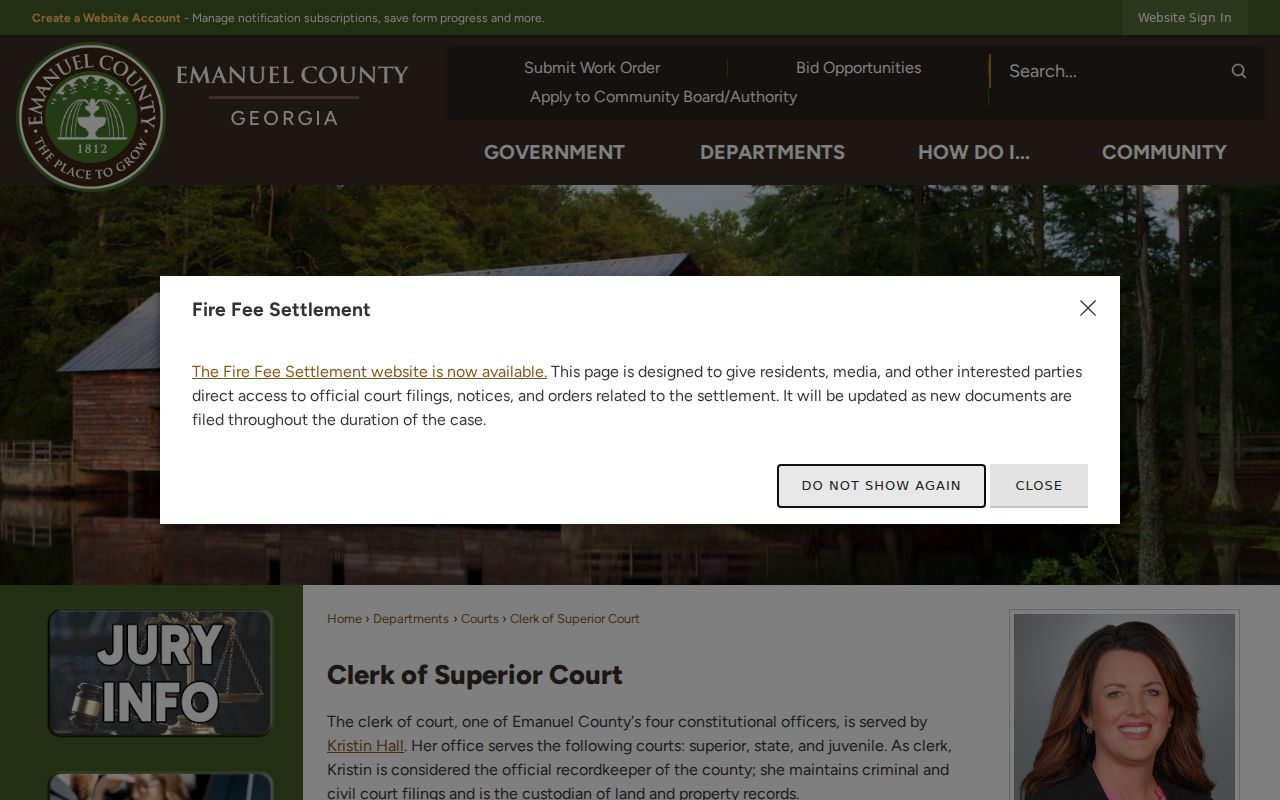
The clerk's official page confirms the counter details and court-record role.
The public terminal is an important fallback because no comprehensive free Georgia criminal-case name search was confirmed. Bring the name, an approximate filing period, and any known case number, then ask whether the matter belongs to Superior Court or State Court. A terminal result can identify the docket, but a screen print is not necessarily a certified record. If the document will be used to correct your own GCIC history, ask the clerk which certified disposition shows the final outcome.
Criminal Record Types
“Criminal record” can refer to documents created at different stages. Emanuel County agencies do not necessarily possess one another's records, and a public result may cover only one slice of the process.
- Incident and arrest reports - the investigating sheriff, police department, or other agency keeps the narrative.
- Booking records - the detention center records intake, preliminary charges, bond or hold information, and release or transfer.
- Court case files - the clerk maintains pleadings, docket events, judgments, sentences, and filed dispositions.
- Repository entries - GCIC assembles qualifying arrest cycles and dispositions reported by justice agencies.
- Custody, supervision, and registry records - GDC, DCS, parole authorities, and the Georgia Sex Offender Registry answer distinct status questions.
The County Form Has Sharp Limits
The Emanuel Board of Commissioners' online Open Records Request form is unusually explicit about routing: it is the wrong destination for sheriff, jail, E-911, and court records. Send a sheriff request to the administrative office and a jail request to the detention center. Ask the court clerk for docket documents. Using the general form for an excluded office adds delay without transferring custody of the record.
A focused request should name the record series, date range, location, agency, case or booking number if known, preferred format, and a cost ceiling. Emanuel publishes no detailed sheriff fee schedule, so request an estimate before production. Under the Georgia Open Records Act, the three-business-day rule concerns a response or an explanation of availability; it is not a promise that extensive video, archived material, or records needing legal review will be produced within three days.
The county's open-records guidance explains office-by-office routing.
For an incident report, state the date and time range, location, investigating agency, and agency case number. For a booking request, substitute the booking date or number and specify the booking sheet, charge and bond ledger, or release date if maintained. Ask the custodian to redact exempt information and provide the remainder where feasible. Preserve the request and response, clarify ambiguous terms promptly, and ask for the legal basis when a portion is withheld.
Inside an Emanuel County Criminal Record
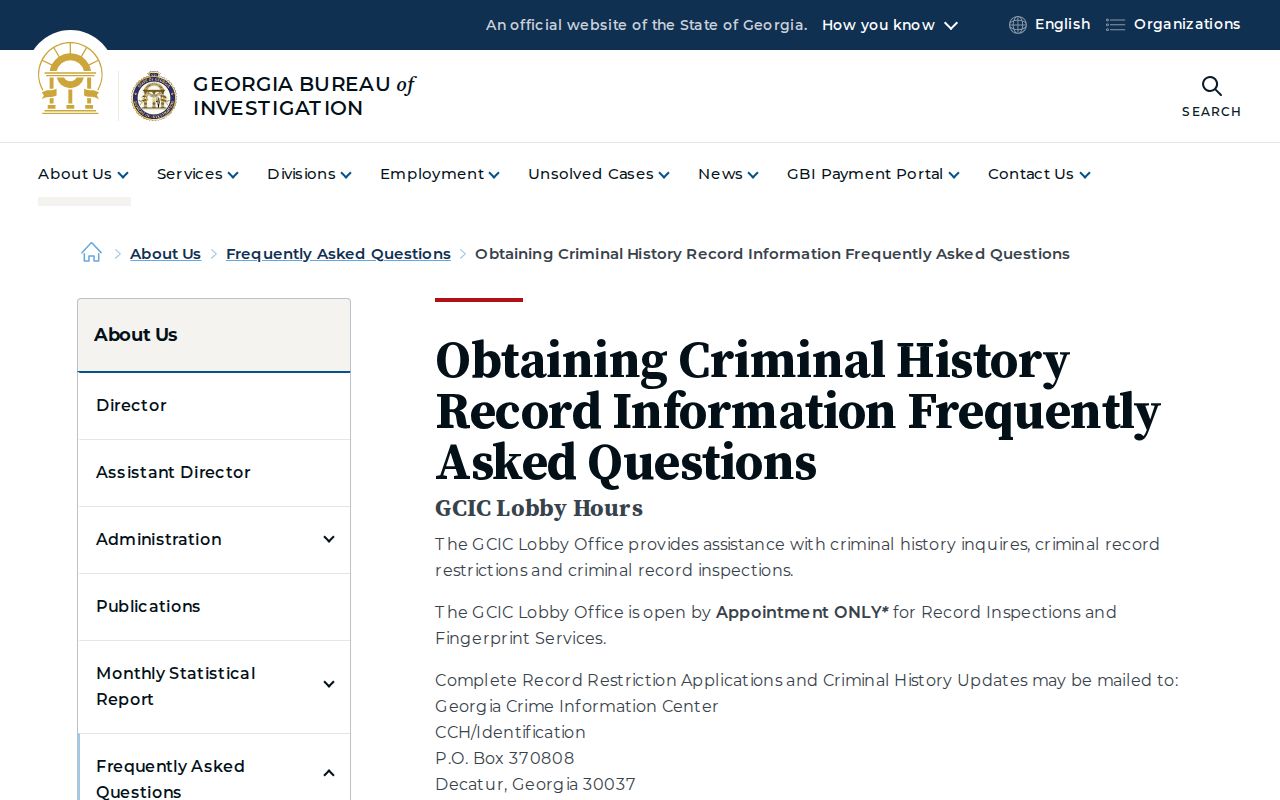
Read each field in the context of its source. A booking ledger describes intake allegations, while a court judgment records adjudication. GCIC can show reported cycles, but a missing disposition may require correction through the reporting court or agency.
The GBI criminal-history FAQ describes repository contents, inspection, and correction.
| Name & Identifiers | Legal name, aliases, date-of-birth information where releasable, and an agency or state identifier. |
|---|---|
| Arrest / Booking Data | Arrest date, agency, booking number, intake charges, bond or hold entries, and release or transfer status. |
| Charges & Statutes | Count-by-count allegations and Georgia Code citations, which may change between booking and filing. |
| Disposition | Dismissal, nolle prosequi, acquittal, plea, conviction, First Offender treatment, or another filed outcome. |
| Sentence | Confinement, probation, fines, restitution, conditions, and later revocation or termination orders. |
| Custody / Supervision Status | Current jail or GDC location and DCS or parole information, which is separate from the judgment. |
Read the Disposition, Not the Headline
Start with the case header, verify the court, and write down the exact case number. Establish the filing date, status, and prosecuting party before comparing the filed counts with booking charges. Prosecutors may file different charges; a grand jury may indict fewer or additional counts; and amendments or negotiated pleas can change the final conviction. “Disposed” alone does not explain the outcome. Order the judgment, dismissal, nolle prosequi order, verdict, plea, or sentencing order rather than guessing.
Dates also answer different questions. Arrest date concerns custody, filing date begins the court matter, arraignment records a procedural stage, and judgment date reflects adjudication. A hearing may be continued. A historical warrant can already be recalled, a displayed bond can change by court order, and a zero balance does not prove dismissal. Those distinctions are why a docket summary should be checked against the filed disposition.
Public Access Laws in Georgia
Georgia starts with public access to many agency and court records, but access is record-specific. The Open Records Act permits reasonable retrieval, redaction, and copy charges and recognizes exemptions. Criminal-history dissemination has separate rules, and sealed, restricted, juvenile, medical, victim, security, and active-investigation information can be unavailable or redacted. Ask for segregable nonexempt portions rather than assuming a partial exemption closes the entire file.
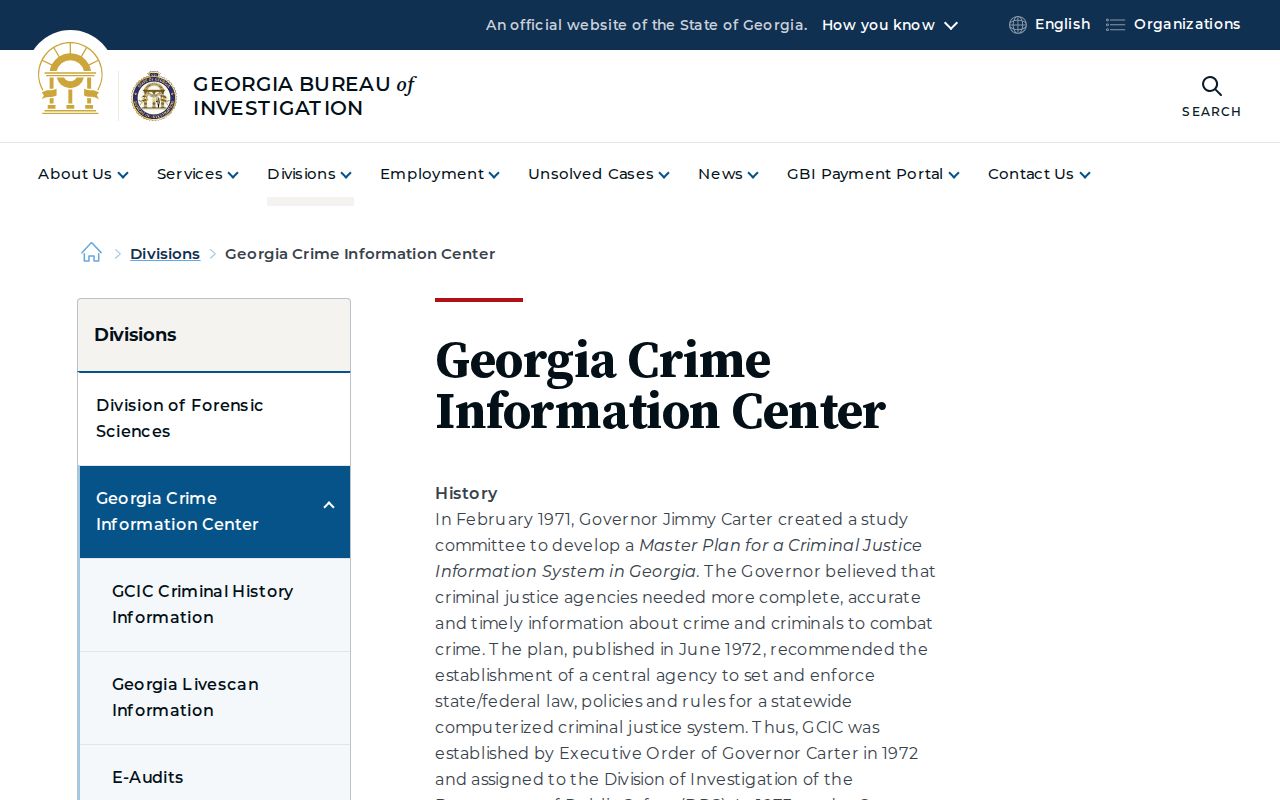
The GCIC program page identifies the statewide repository and its related services.
Key Statutes:
O.C.G.A. § 50-18-70 - states Georgia's policy favoring open inspection of public records.
O.C.G.A. § 50-18-71 - governs access procedures and allowable production costs.
O.C.G.A. § 50-18-72 - identifies categories exempt from ordinary disclosure.
O.C.G.A. § 35-3-35 - addresses dissemination and inspection of criminal-history information.
O.C.G.A. § 35-3-37 - provides Georgia's record-restriction and sealing framework.
Court Calendars Need Verification
Superior Court handles felonies as part of the Middle Judicial Circuit. Its Emanuel sessions are listed for Wednesdays at 10:00 a.m., except second and fifth Wednesdays and holidays; trial terms are scheduled for the second Monday of January, April, and July and the third Monday of October. State Court handles misdemeanors, traffic cases, and warrant functions, with sessions listed for first and third Mondays at 9:00 a.m. and trial terms on the last Monday of April, July, and October.
Those published patterns are not a guarantee that a specific matter remains on a particular calendar. Continuances, holidays, judicial orders, and case-specific scheduling can intervene. Confirm the date with the clerk and use the case number. State Court payments through the county ticket portal or clerk are payment channels, not proof of a universal public name-search system.
PeachCourt also needs careful description. Emanuel's county material identifies mandatory Superior Court electronic filing since January 1, 2019, and the Georgia Courts chart shows Emanuel State Court participation. That establishes an e-filing channel, not universal free public access to every criminal case or image. Older paper records, confidential filings, sealed matters, and documents outside a public account may still require clerk retrieval. Confirm any document charge before ordering.
Sealed, Expunged, and Restricted Records
Georgia calls its primary remedy record restriction, although “expungement” remains common public language. O.C.G.A. § 35-3-37 and related rules determine eligibility, procedure, and whether court material can also be sealed. The First Offender Act provides a different discharge-and-exoneration framework. An arrest is not automatically eligible merely because it is old, and a restriction is not the same as deleting every record held for authorized purposes.
Begin with the GBI restriction guidance and the court that owns the disposition. GCIC generally needs accurate final-disposition reporting before a cycle can be handled correctly. Juvenile records, protected victim information, and sealed files have separate access rules. If your history appears incomplete, obtain the certified disposition and follow the reporting court, arresting agency, and GCIC correction route.
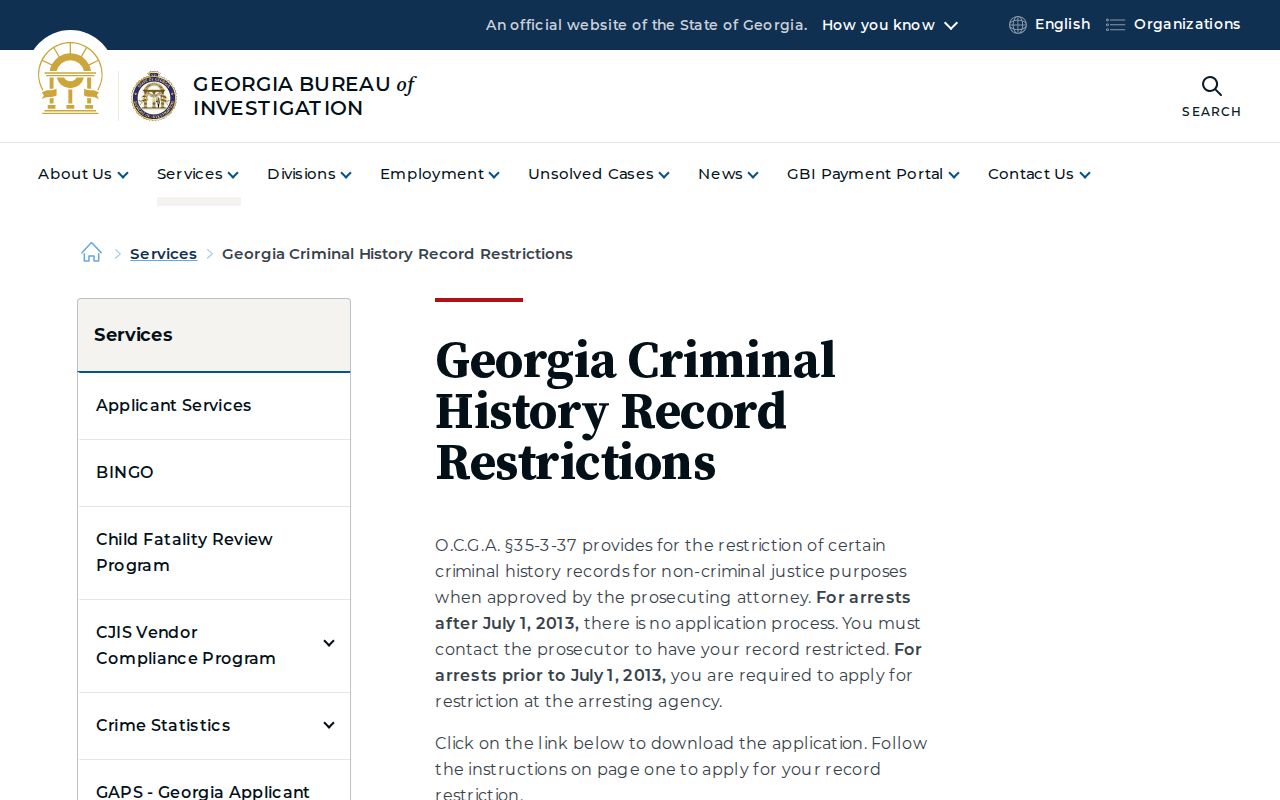
The official record-restriction page supplies the current state process and form route.
Recent Records Appear on Different Clocks
Immediately after an event, the investigating agency may have a report number while the detention center is still completing intake and no court case has been filed. After booking, jail staff may be able to confirm custody and bond or hold data while the clerk still has no accusation or indictment. Once a prosecutor files charges, the docket becomes the central source for the case. After transfer to state custody, a local jail entry may close while GDC Find an Offender becomes relevant.
This staggered timing explains why one official system can have a result while another does not. Retry the appropriate system or call its custodian rather than treating silence as proof. VINE can supplement custody-status notification, but it does not replace the booking record, court judgment, or GCIC history. Any bond figure may change by judicial order; ask the jail or court for the current official channel without assuming an unverified payment method.
A booking charge is a probable-cause allegation, not a final finding of guilt. The prosecutor can file different counts, and the final judgment may record a dismissal, acquittal, plea, conviction, First Offender disposition, or another result. When a recently filed matter is absent, confirm spelling and agency, allow for normal intake or filing delay, and check again with the custodian that owns the particular stage.
Emanuel County Criminal Records by City
Swainsboro, Twin City, and Adrian each add a municipal layer. City police keep their own incident narratives, municipal courts handle authorized ordinance and citation matters, and custodial arrests can move to the Emanuel detention center before a county prosecution begins. The issuing agency and filed court matter more than the mailing address. Adrian requires an extra jurisdiction check because the city crosses the Emanuel–Johnson County line.
Swainsboro Criminal Records
2025 estimate: 7,436 · Police reports stay with SPD; county cases move to the Emanuel clerk.
Twin City Criminal Records
2020 population: 1,642 · City Hall and Municipal Court are key first contacts.
Adrian Criminal Records
2020 population: 552 · Confirm which side of the two-county city handled the event.
Prepare the Right Search Fields
Different systems ask for different identifiers. Georgia Felon Search uses first and last name, date of birth, and sex. The Emanuel clerk's public terminal is best approached with name, case number if known, court division, filing range, and status. GDC Find an Offender supports combinations such as name, case number, age, gender, race, and most recent institution. A sheriff request should identify an incident or booking record rather than demand “everything” about a person across unlimited years.
- Case number
- The strongest key for clerk staff and docket documents.
- Report or booking number
- Connects the request to the agency or detention record.
- Event date and location
- Helps separate similar names and identify the correct agency.
- Exact document type
- Specify an indictment, accusation, judgment, sentence, dismissal, or certified disposition.
For court copies, ask whether the file is electronically indexed, available only at the public terminal, stored in an archive, or sealed. The county publishes no criminal-copy price. Request a quote and confirm whether email, portal delivery, mail, or pickup is available and whether prepayment is required.