
Emanuel County Criminal Court Cases
Emanuel Superior Court, in Georgia's Middle Judicial Circuit, hears felony prosecutions. Emanuel State Court hears misdemeanors, traffic violations, and warrant matters. A municipal court can retain ordinance and fine-only citations. One name may therefore appear in several courts, and the agency that made an arrest does not identify the court that received the filed charge.
Clerk Kristin C. Hall maintains Superior and State Court dockets and case papers. Her office at 125 South Main Street in Swainsboro provides a public-access terminal. The docket is the authoritative trail for an accusation or indictment, motions, hearings, plea or verdict, disposition, and sentence. A booking list, calendar, or GCIC history answers a different question.
The Superior Court judge's Emanuel office is in Suite B at the same Main Street address. The District Attorney moved in May 2024 to 401 West Main Street, while the public defender office is at 120 North Main Street. Those offices handle prosecution and defense, but the clerk remains custodian of filed pleadings and orders. Older directories may list the former DA location.
Which Emanuel County Criminal Court?
Use the charging document or case header to identify the court before ordering records. Superior Court is the felony route. State Court handles misdemeanors and traffic. Swainsboro, Twin City, and Adrian municipal courts may hold ordinance or citation records, so a city-issued matter may not appear in the county file at first.
| Court | Typical record | First contact |
|---|---|---|
| Superior Court | Felony accusation or indictment, judgment, sentence | County clerk |
| State Court | Misdemeanor, traffic, warrant matters | County clerk or State Court |
| Municipal court | City ordinance and citation cases | Issuing city |
The official State Court page documents the misdemeanor and traffic route.
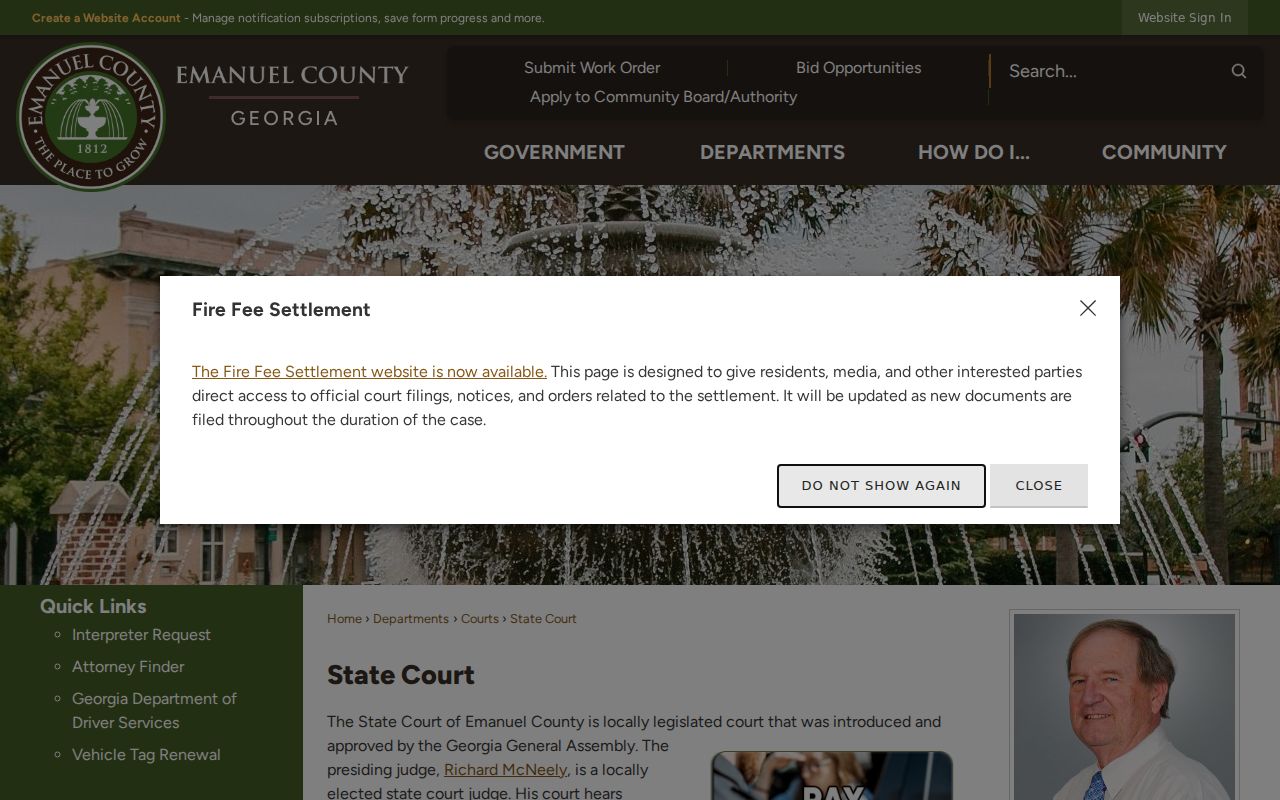
A Swainsboro address alone does not settle jurisdiction. Confirm the issuing agency and filed court.
Searching Emanuel County Case Records
The most dependable search is the clerk's terminal and counter. Call 478-237-8911 before traveling if a case is old, certification is needed, or the court is uncertain. PeachCourt supports filing and document workflows, but an account, payment, and court-specific access limits may apply. It does not prove every criminal image is freely searchable online.
Begin with the case header and verify Emanuel Superior Court, Emanuel State Court, or the named municipal court. Write down the exact docket number before opening events. Establish filing date, status, and prosecuting party, then compare each count with the booking charge. The wording may differ because a probable-cause charge is preliminary, prosecutors may accuse another offense, a grand jury may change the count list, and a plea may resolve a narrower charge. The signed final judgment gives the best account of the outcome.
- Identify Superior, State, or municipal court from the charging paper or offense level.
- Search by exact name, case number, or a narrow filing-year range.
- Compare middle name, court, filing date, and public identifiers before accepting a match.
- Read each count and docket event through the final judgment.
- Ask for the exact order or a certified disposition and request a price quote.
| Field Label | Type | Required | Notes |
|---|---|---|---|
| Exact name | Text | No | Use legal spelling and compare middle name. |
| Case number | Text | No | Strongest key when known. |
| Filing year | Range | No | Narrows common names and archive work. |
| Court | Division | Yes | Choose Superior, State, or municipal. |
| Status | Filter | No | Confirm open or disposed on the docket. |
Emanuel County Public Court Terminal
The public terminal is a core access channel. The clerk is open Monday through Friday, 8:00 a.m. to 5:00 p.m., at 125 South Main Street, Swainsboro, GA 30401. Call about archive retrieval, image access, delivery, and certification because no criminal-copy price is published.
Give staff the case number and exact document name: accusation, indictment, plea, verdict, sentence, dismissal, nolle prosequi, revocation order, or certified disposition. Ask whether it is electronic, terminal-only, archived, sealed, or available remotely.
The official clerk page documents this office and access route.
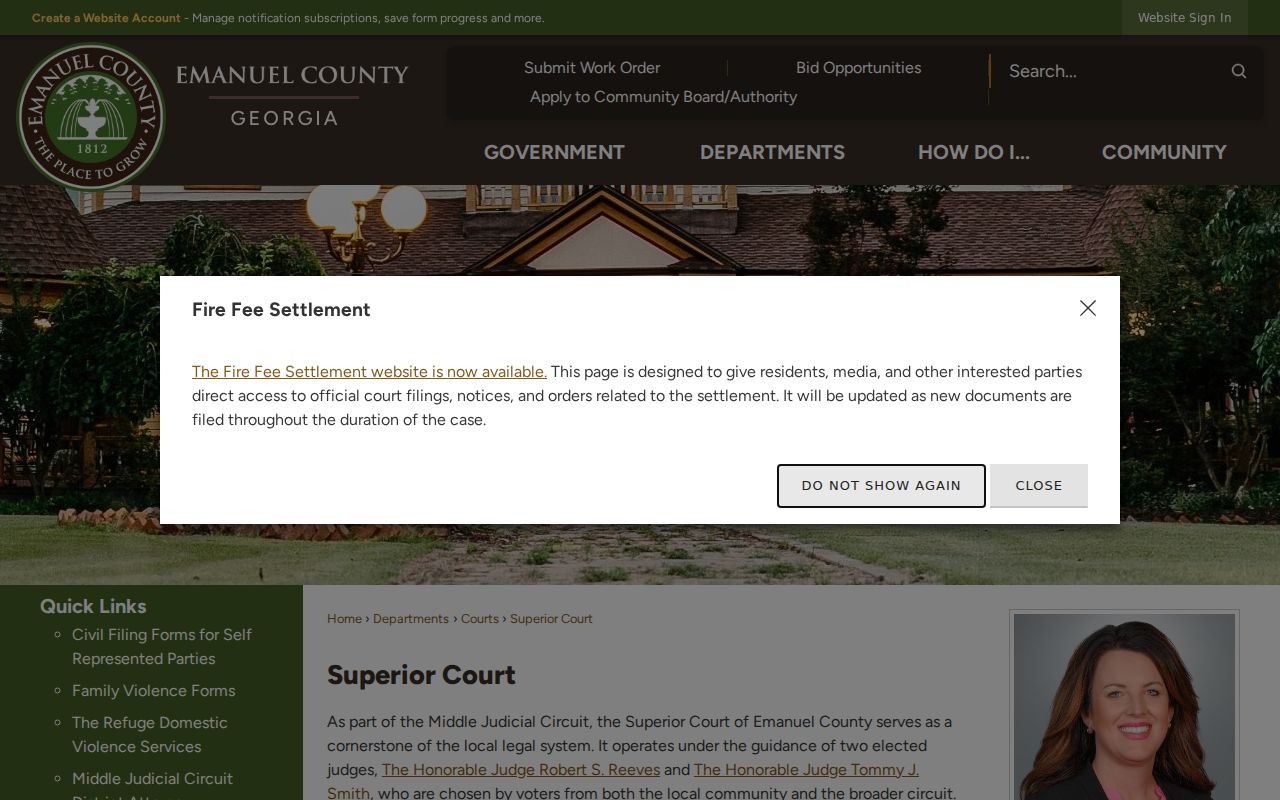
Check the county source before a visit because calendars and counter practices can change.
Inside an Emanuel County Case File
The case file separates what prosecutors alleged from what the court decided. Start with court, docket number, filing date, and status. Follow each charge through amendments, plea or trial, and judgment. A docket print can summarize events but is not always a certified record.
| Case Number & Court | Identifies the docket and record custodian. |
|---|---|
| Charging Document | Filed counts, which may differ from booking charges. |
| Docket Entries | Filings, appearances, motions, pleas, and orders. |
| Hearing Dates | Scheduled or continued events, not proof of outcome. |
| Disposition & Judgment | Dismissal, nolle prosequi, acquittal, plea, conviction, or other result. |
| Sentence & Conditions | Confinement, probation, financial terms, and conditions when imposed. |
Reading Emanuel County Criminal Dockets
Dates answer separate questions. Arrest date concerns custody; filing date marks the court matter; arraignment sets a plea; judgment records adjudication; sentence may follow later. A hearing can be continued, a warrant recalled, and bond changed by order. Do not treat an early entry as the final state.
- Nolle prosequi
- The prosecution declined to continue that count at that point.
- Dead docket
- The matter is inactive, not necessarily acquitted or finally dismissed.
- Disposed
- An end status whose actual outcome requires the judgment or order.
- First Offender
- Georgia treatment whose discharge must be read from the court order.
When a docket only says “disposed,” order the disposition. A zero balance does not prove dismissal, and listed bond does not prove that sum remains payable.
Financial entries may combine fines, costs, surcharges, restitution, and payments. Read them with the sentence instead of using a balance to infer guilt or dismissal. Probation termination and restriction can occur years later. A historical warrant entry may concern a warrant later recalled, so the newest relevant order matters.
Compare each initial count with amendments, the plea or verdict, and judgment. Acquittal, dismissal, nolle prosequi, dead docket, and First Offender discharge have different effects. When the summary is unclear, request the signed order instead of guessing from a short status label.
How an Emanuel County Criminal Case Moves
After arrest and booking, prosecutors decide what to file by accusation or seek through indictment. Arraignment sets a plea. Pretrial work can include motions, discovery, negotiations, and calendar changes. The matter ends by dismissal, plea, trial result, or another disposition, followed by sentencing when guilt is established. Official sources support no fixed duration.
Case flow: Charges Filed › Arraignment › Pretrial › Plea or Trial › Disposition › Sentencing
Superior Court ordinarily meets Wednesdays at 10:00 a.m., excluding second and fifth Wednesdays and holidays. State Court generally meets first and third Mondays at 9:00 a.m. Confirm a specific setting with the clerk.
Trial terms are the second Monday of January, April, and July and the third Monday of October for Superior Court. State Court trial terms are the last Monday of April, July, and October. These schedules help identify a possible record window, but do not prove a named case was heard. Continuances, holidays, and orders can move an event. Use the docket entry and resulting order to establish what occurred.
PeachCourt and Emanuel Criminal Filings
Emanuel's page states mandatory Superior Court e-filing since January 1, 2019, and identifies PeachCourt. The Georgia Courts e-filing chart also shows State Court participation.
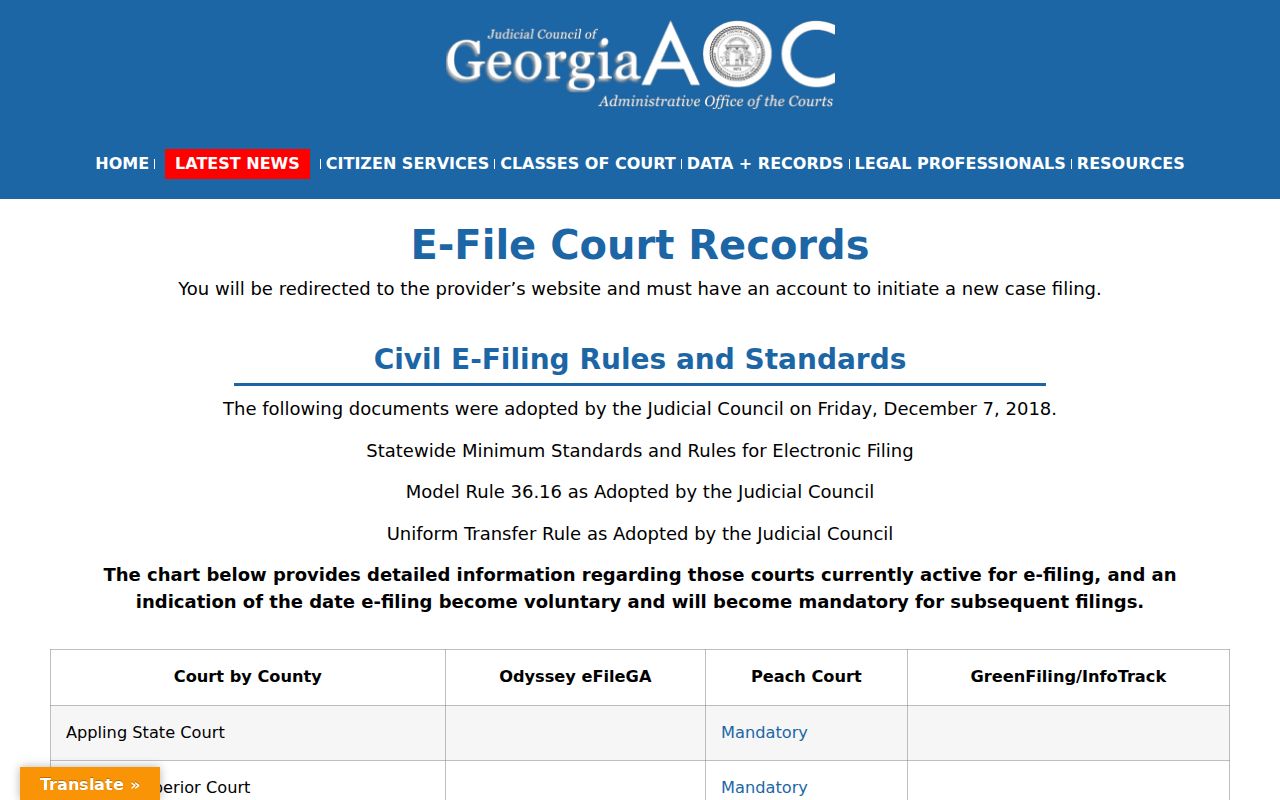
That establishes a filing route, not universal free public searching. The PeachCourt gateway may require an account or payment.

Cases or images can be absent, sealed, confidential, or in paper archives. Confirm missing results with the clerk. The Georgia Superior Court Clerks' Cooperative Authority is an official statewide gateway, but it is not a universal criminal docket.
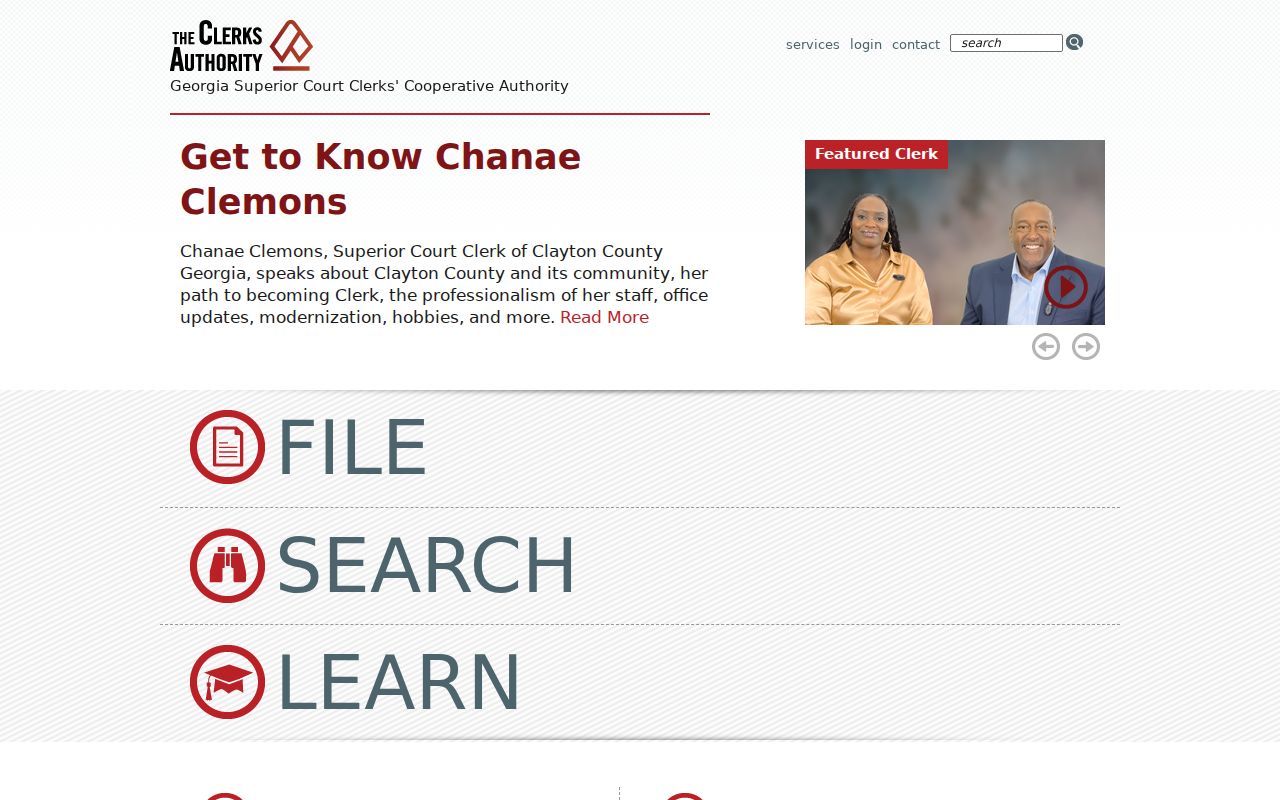
Use Emanuel's clerk for the county criminal file rather than assuming another GSCCCA service contains it.
When Emanuel County Charges Change
A booking charge records the probable-cause basis at intake. Prosecutors can file different counts, a grand jury can return fewer or added counts, and amendments or a plea can change the ultimate conviction. Compare the jail entry with the accusation or indictment, then read the judgment and sentence.
Count-by-count comparison prevents a common error. Record the booking allegation, then locate the accusation or indictment, any amended count, and the plea or verdict. Finish with the judgment and sentencing order. Prosecutors can file fewer, additional, or different charges than those listed at intake. A negotiated plea can also produce a conviction for a different count. If the docket merely says disposed, request the disposition rather than assigning a result. When GCIC lacks that outcome, a certified Emanuel order gives the reporting court and agency the source document needed for correction.
The official Legal Services page identifies the Middle Judicial Circuit prosecutor and defender offices.
The Emanuel County arrest lookup follows custody and agency records; the docket follows prosecution and outcome. If GCIC lacks a disposition, obtain a certified order and use the correction chain.
Emanuel County Case Record Access & Restrictions
Not every field is open. Juvenile material, sealed or restricted records, victim identifiers, Social Security numbers, medical data, and confidential exhibits may be withheld or redacted. O.C.G.A. § 35-3-37 governs criminal-history restriction and correction; juvenile law limits ordinary access.
GCIC data are not wholesale county open records. The Georgia Open Records Act, O.C.G.A. §§ 50-18-70 through 50-18-77, governs many local records subject to exemptions. Court requests go to the clerk, not the commissioners' form. Ask whether a missing case is archived, in another court, sealed, or indexed under another spelling.
A court calendar is not a criminal history or final docket. Emanuel Superior Court settings, State Court sessions, and individual hearing dates can change or be continued. Confirm the current setting with the clerk at 478-237-8911, then inspect the filed order after the event. Appeals may create a separate record in the Georgia Court of Appeals or Supreme Court, but the Emanuel clerk retains the trial-level file.
Note: Request nonexempt portions and the legal basis for withheld material instead of assuming the whole file is closed.